Beyond Generative AI: The Rise of Autonomous Legal Agents in Southeast Asia
Kaushik Karmakar
Author
Why in-house counsel and law firm leaders are watching the region's move from generative to autonomous legal AI
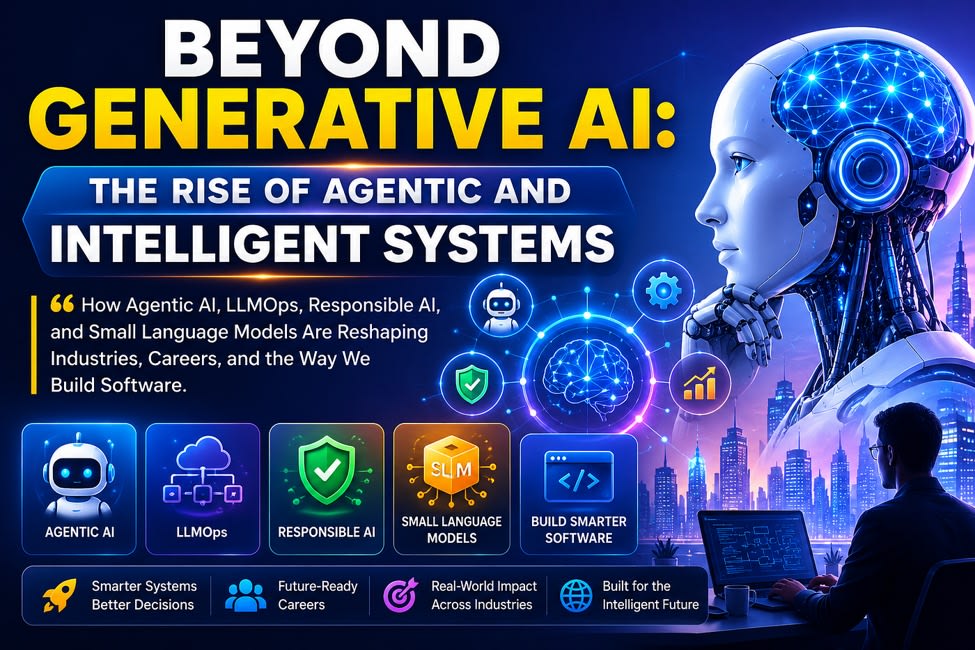
For the past two years, the legal industry's conversation about artificial intelligence has followed a familiar script: draft a contract **summary** here, run a due diligence check there, ask a chatbot to explain a clause. Useful, but modest. In 2026, that conversation has changed shape across Southeast Asia, and the shift is bigger than a new feature release. Law firms, in-house teams and regulators are now talking about “agentic AI” — systems that don't just answer a question but carry out a chain of legal tasks on their own, checking their own work, escalating only when something needs a human eye.
The scale of the move is easier to see in numbers than in press releases. A regional study published alongside the Legal **Innovation** Festival Southeast Asia, conducted with the Asia-Pacific Legal **Innovation** & Technology Association, found that close to nine in ten legal professionals across the region are already using some form of AI in their work. A separate industry survey of more than 1,500 professionals recorded adoption climbing from roughly a fifth of organisations to about two in five within a year, and put the proportion of elite firms that have moved past simple chat tools into autonomous, multi-step workflows at around 15 percent. Small as that last figure sounds, it marks the difference between AI as a writing aid and AI as a colleague that finishes tasks unsupervised.
What does that look like on the ground? At Bayer's Southeast Asia operations, the regional legal operations lead built an internal agentic platform, now used company-wide, that has cut employee workload by more than 2,500 hours. It handles the kind of multi-step navigation that used to eat up a junior lawyer's morning — routing requests, pulling relevant precedent, assembling first drafts — without someone sitting over its shoulder for every step. The lawyer behind it was candid about the limits, too: the system can move fast, but it has no instinct for reading a room, no memory of history or context the way a person does. That distinction — speed without judgment — is becoming the central design question for every legal-tech buyer in the region.
Singapore has moved quickest to put guardrails around this shift, and its choices are shaping expectations well beyond its own borders. In March, the Ministry of Law published a detailed guide for using generative AI in legal practice, drawn from consultation with law firms and in-house teams and organised around progressive stages of adoption. It sets out where a “lawyer in the loop” is non-negotiable — court filings, anything client-facing and high-stakes — and where lighter, supervisory oversight is acceptable, such as scheduling or internal document routing. By May and June, the Infocomm Media Development Authority had gone further, publishing and then updating a governance **framework** specifically for agentic systems, alongside a discussion paper asking a question every general counsel will eventually have to answer: when an autonomous agent takes an action nobody explicitly authorised, who is legally responsible for it? The country's data protection regulator has since opened consultation on how personal data can be used inside generative and agentic tools, with responses due this month.
The financial sector offers an early preview of how seriously regulators are taking this. Singapore's central bank recently closed the second phase of a multi-year initiative on AI risk management, publishing an operations handbook aimed squarely at institutions deploying agentic systems. It names the failure modes plainly: agents taking actions no one approved, errors that cascade across connected systems once one agent hands off to another, and the practical difficulty of controlling which tools an agent is allowed to reach for. Legal departments inside banks and insurers are now expected to have an inventory of every AI system in use, board-level accountability for it, and training that treats AI oversight as a core competency rather than an IT afterthought. It's a reasonable bet that similar expectations reach corporate legal teams outside financial services before long.
None of this is uniform across the region, and that unevenness is itself worth planning around. Indonesia, Thailand, Vietnam, Malaysia and the Philippines are each building their own frameworks, at their own pace, in their own languages — which means a system built for compliance in Singapore may need real rework before it's fit for a rollout in Jakarta or Ho Chi Minh City. There's a cross-border wrinkle for legal-tech vendors and their clients, too. Analysts have flagged that a growing share of countries may move toward requiring AI platforms to sit on sovereign or region-specific infrastructure — a shift that could complicate how Southeast Asian legal-tech products are procured, hosted and contracted for by clients operating across the Gulf, South Asia and beyond.
For general counsel and law firm leaders watching this from outside the region, the practical takeaway isn't about the technology itself — it's about the contract language and governance sitting around it. Vendor agreements increasingly need to specify what an agent is authorised to do, how its actions are logged, who reviews escalations, and who carries liability when something goes wrong. Engagement letters are starting to include clauses disclosing AI use to clients and explaining what changes if a client opts out. None of this is exotic; it's the same discipline that governed outsourcing and technology vendor contracts a decade ago, applied to a tool that now acts rather than just advises.
The question Southeast Asia's legal market has settled in 2026 isn't whether AI belongs in legal work. That debate is over. The live question — the one worth a proper session at any conference bringing GCs and legal leaders together — is how much autonomy a legal team is willing to hand an agent, and what has to be true before that trust is earned.
Share this article
Written by
Kaushik Karmakar
A legal industry expert and contributor to LexTalk World, sharing insights on global legal developments, technology, and professional growth.
Related Articles
Reevaluating Law Firm Tech Success by Shifting Focus from Headcount Reduction to Risk Prevention and Client Experience Metrics

Judicial Enforcement Against AI Hallucinations in Legal Filings

THE MACHINE ISN'T THE STORY. WE ARE.