India’s DPDP Act: From Compliance Burden to Business Trust
Kaushik Karmakar
Author
India’s Digital Personal Data Protection Act, 2023 (DPDP Act) is no longer just another regulatory development for legal and compliance teams. It marks a major shift in how businesses collect, process, store, and use personal data in an increasingly digital economy.
The law emerged after years of debate around privacy rights, especially following the landmark Justice K.S. Puttaswamy vs. Union of India judgment, where the Supreme Court recognised privacy as a fundamental right under Article 21 of the Constitution. The DPDP Act now places that principle into operational reality.
At the heart of the legislation is a simple idea: individuals must have greater control over their personal data, while organisations handling that data must act responsibly and transparently.
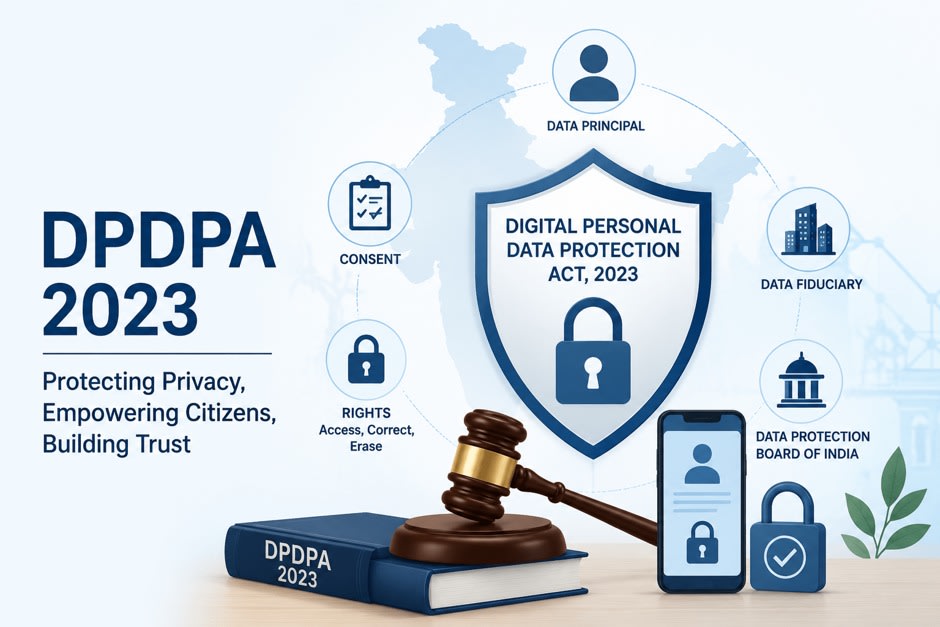
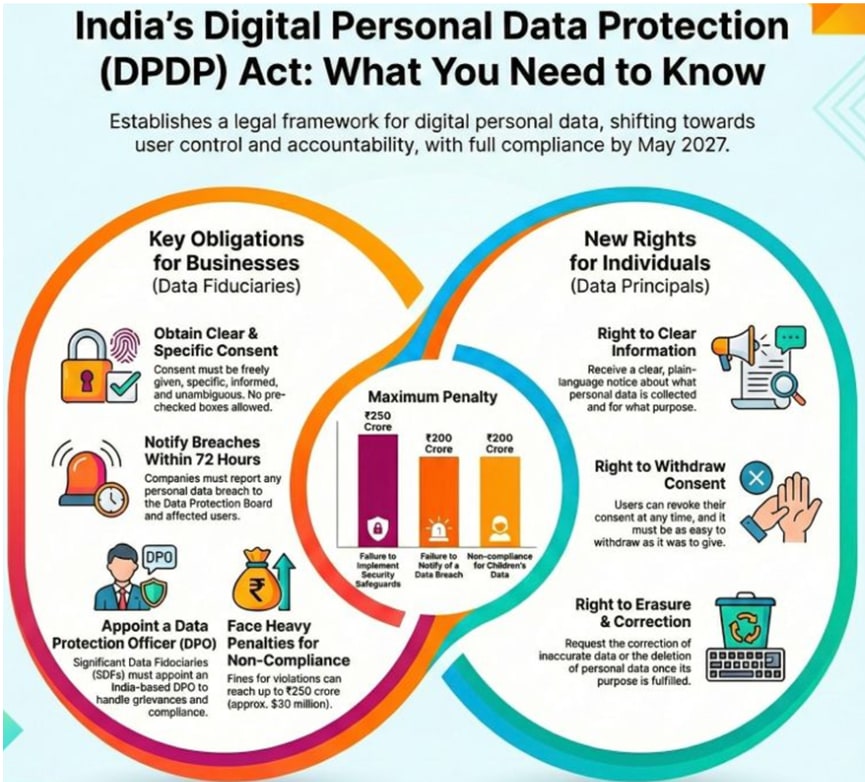
The Act introduces three key stakeholders. The “Data Principal” refers to the individual whose data is being processed. The “Data Fiduciary” is the organisation deciding why and how that data is collected, while a “Data Processor” handles the data on behalf of the fiduciary. Large entities processing significant volumes of data may also be classified as “Significant Data Fiduciaries” and will face additional compliance obligations.
Consent sits at the centre of the DPDP framework. Organisations can no longer rely on vague privacy policies or pre-ticked boxes. Consent must be free, informed, specific, unconditional, and supported by a clear affirmative action. Equally important, users must be able to withdraw consent as easily as they gave it.
The Act also brings a strong emphasis on transparency. Privacy notices must clearly explain what data is being collected, why it is required, and how individuals can exercise their rights. For a country as linguistically diverse as India, the requirement to provide notices in multiple recognised languages could become one of the most practical compliance challenges for businesses.
Another major shift is the principle of data minimisation. Companies are expected to collect only the data necessary for a specific purpose and retain it only for as long as required. The earlier practice of storing large volumes of customer data “just in case” is becoming increasingly difficult to justify.
Security obligations under the Act are equally significant. Businesses must implement reasonable safeguards to prevent data breaches and unauthorised access. In the event of a breach, organisations are expected to inform both affected individuals and the Data Protection Board of India without unnecessary delay.
For sectors such as banking, fintech, healthcare, e-commerce, and ed-tech, compliance will not be limited to updating privacy policies. It may require redesigning customer journeys, rebuilding consent systems, revisiting vendor contracts, and introducing stronger internal governance structures.
The Act also empowers individuals with enforceable rights, including the right to access information, seek correction or erasure of personal data, withdraw consent, and raise grievances. In a notable addition, individuals can also nominate another person to exercise these rights in case of death or incapacity.
Share this article
Written by
Kaushik Karmakar
A legal industry expert and contributor to LexTalk World, sharing insights on global legal developments, technology, and professional growth.